Progressive Retinal Atrophy: Mapping the Genes Behind Canine Blindness
Research-driven insights into PRA genetics, breed-specific variants, and the path toward eliminating inherited blindness in dogs.
In over twenty years of veterinary ophthalmology practice, I have examined thousands of dogs at every stage of Progressive Retinal Atrophy. Each case reinforces both the tragedy of inherited blindness and the remarkable progress we have made in understanding its genetic basis. PRA is not one disease but many, each caused by mutations in different genes, each affecting different breeds, each progressing at its own pace.
This resource brings together current clinical knowledge, practical guidance for breeders navigating genetic testing, and genuine hope from advances in gene therapy. My goal is to translate what we know into tools that help prevent canine blindness and support dogs already affected. Recent additions include owner-focused pieces on PRA insurance claims and financial planning and on navigating current gene therapy trials.
Dr. Amanda Foster, Veterinary Ophthalmologist
Research & Guidance
From gene identification to breeding strategies, comprehensive resources for understanding and managing PRA.
The Many Faces of PRA: Different Genes, Different Breeds
Over 20 distinct genetic mutations cause PRA across different breeds. Understanding which gene affects your breed is the first step.
Read Research →prcd-PRA: The Most Common Form of Progressive Retinal Atrophy
Understanding the prcd mutation affecting 29+ breeds including Labradors, Golden Retrievers, and Australian Shepherds.
Read Research →Rod-Cone Dysplasia Variants: rcd1, rcd2, rcd3, and rcd4
The rod-cone dysplasia family causes some of the earliest-onset and most severe forms of inherited blindness in dogs.
Read Research →PRA in Collies, Australian Shepherds, and Herding Breeds
Herding breeds face unique PRA challenges with multiple variants affecting different breeds within the group.
Read Research →How PRA Progresses: From Night Blindness to Total Vision Loss
The clinical journey from subtle night vision changes to complete blindness, and how genetics determines the timeline.
Read Research →Recognizing PRA: Clinical Signs, Examination, and Diagnosis
How veterinary ophthalmologists diagnose PRA, what owners should watch for, and examination techniques.
Read Research →The Critical Importance of Genetic Testing for PRA
Why every breeding dog should be tested and the consequences when testing is neglected.
Read Research →Genetic Testing: Which Test for Which Breed
A practical guide to selecting the right DNA test based on your breed and the specific PRA variants that affect it.
Read Research →Certified PRA Testing Laboratories
How to select a testing laboratory, understand the process, and ensure accurate results for your breeding program.
Read Research →Carrier Breeding: The Math Behind Safe Matings
How to use carriers strategically while eliminating affected offspring. The population genetics of responsible breeding.
Read Research →PRA Breeding Recommendations: A Veterinary Guide
Evidence-based breeding protocols to eliminate PRA while maintaining genetic diversity and breed health.
Read Research →Living with a Blind Dog: Adaptation and Quality of Life
Practical guidance for owners of dogs with vision loss, from environmental modifications to maintaining an active life.
Read Research →The Future of PRA: Gene Therapy and Hope
From Lancelot the Briard to clinical trials, the remarkable progress in restoring vision through gene replacement therapy.
Read Research →Research Advances: From Gene Discovery to Vision Restoration
The latest developments in PRA research, from new gene identifications to therapeutic breakthroughs.
Read Research →Nutritional Support for Dogs with Progressive Vision Loss
Evidence-based dietary strategies and antioxidant supplementation to support retinal health and potentially slow photoreceptor degeneration.
Read Research →Environmental Adaptations for Blind and Low-Vision Dogs
Phased approach to modifying home and outdoor environments for safety, confidence, and independence as PRA progresses.
Read Research →The Ethics of Breeding Carriers: When Population Genetics Matters
Why eliminating carriers can cause more harm than PRA itself, and how population genetics should guide ethical breeding decisions.
Read Research →PRA in Labrador Retrievers: The PRCD Mutation and Breed-Specific Management
Labrador-specific guide to prcd-PRA: carrier rates, clinical signs, testing protocols, and why every working Labrador program must test.
Read Research →PRA in Spaniel Breeds: Cocker Spaniels, Springer Spaniels, and More
Historical context and current guidance for managing prcd-PRA across English Cocker, American Cocker, Springer, and other spaniel breeds.
Read Research →PRA in Poodles: Genetics Across Toy, Miniature, and Standard Varieties
How the same PRCD mutation crosses all Poodle size varieties, and what Doodle breeders must know about cross-breed PRA risk.
Read Research →X-Linked Progressive Retinal Atrophy: When Inheritance Breaks the Recessive Pattern
XLPRA in Siberian Huskies and Samoyeds: how X-linked genetics changes breeding decisions, and why carrier females produce affected sons.
Read Research →Electroretinography (ERG): Measuring Retinal Function Before Clinical Signs Appear
What ERG measures, how the procedure works in dogs, when it complements or replaces DNA testing, and its role in gene therapy research.
Read Research →Ophthalmoscopy and Retinal Examination: What Veterinary Ophthalmologists Look For
Stage-by-stage fundus changes in PRA, examination techniques, pupil dilation, and how eye certification programs work worldwide.
Read Research →Early Puppy Screening for PRA: When to Test and How to Communicate Results
Testing timing in litters, interpreting carrier vs clear puppies, communicating results to buyers, and early-onset PRA forms in puppies.
Read Research →Breed Health Registries and PRA: OFA, BVA/KC, ECVO and Breed Club Databases
How to submit results, verify breeding partners through registries, and why open registries benefit breeds more than private testing.
Read Research →PRA in Dachshunds: The cord1 Mutation and Its Unusual Incomplete Penetrance
The RPGRIP1 retrotransposon insertion causing cord1 PRA in Miniature Long-haired Dachshunds, plus the CCDC66 modifier that explains variable disease expression.
Read Research →Training Techniques for Dogs Losing Vision Through PRA
Building auditory cue systems, tactile signals, scent work, and navigation training to maintain confidence and quality of life as sight diminishes.
Read Research →Major PRA Gene Discoveries
PRCD29+ breeds including Labs, Cockers
Identified 2006
rcd1Irish Setters
First PRA gene mapped
rcd3Welsh Corgis
PDE6A mutation
RPE65Briards
Gene therapy success
Preserving Vision Through Genetics
Every DNA test, every informed breeding decision, every carrier carefully managed brings us closer to a future where no dog loses their sight to PRA.
Learn Carrier Breeding StrategiesPRA Research Notes
Field Notes for Herding Eyes
These selected guides stay visible because they are revisited as clinical evidence, testing practice, and owner questions develop.

Recognizing PRA: Clinical Signs, Examination, and Diagnosis
A practical route from subtle night-vision changes to ophthalmic examination, ERG, and genetic confirmation.
Read Research →
Breed Health Registries and PRA: OFA, BVA/KC, ECVO and Breed Club Databases
How open registries help verify results, compare breeding partners, and turn individual tests into population knowledge.
Read Research →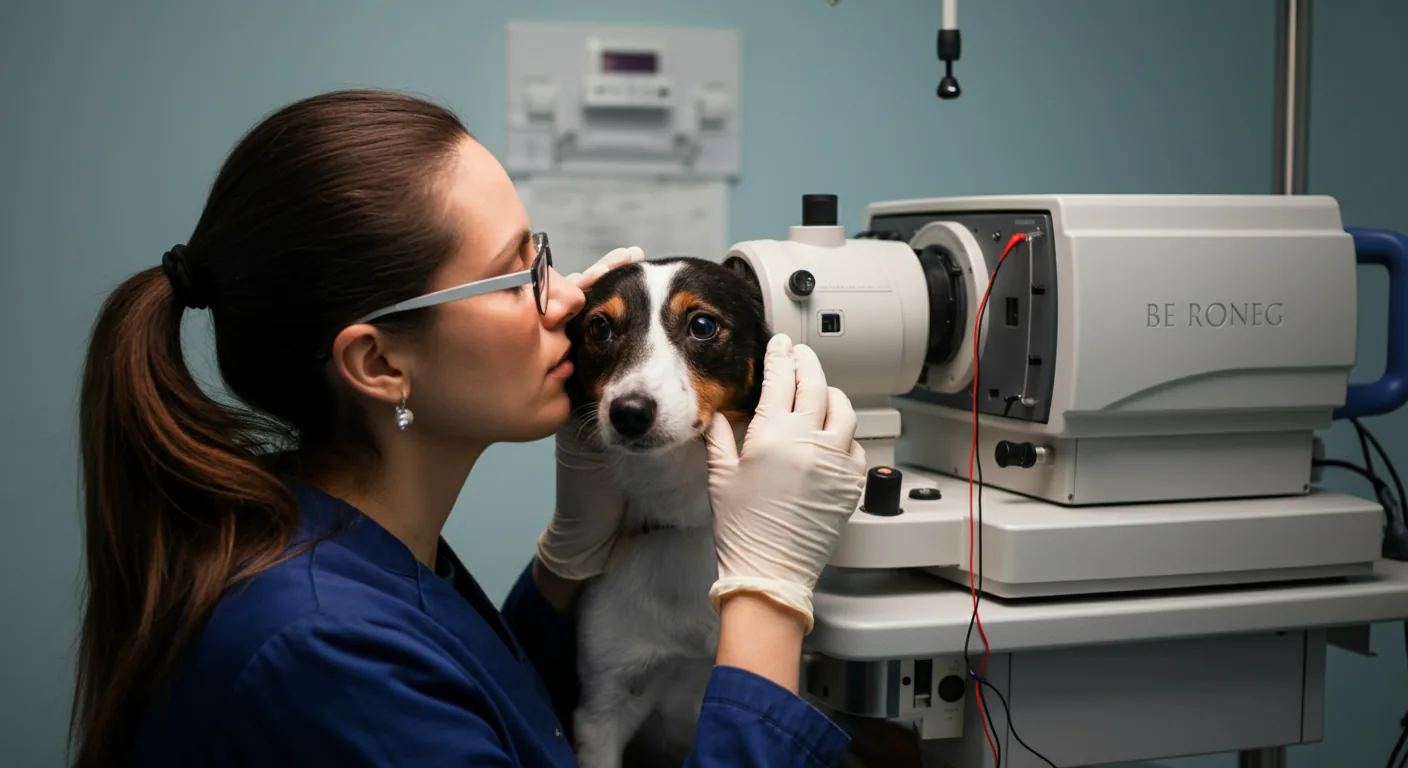
Electroretinography (ERG): Measuring Retinal Function Before Clinical Signs Appear
What ERG records, how dark- and light-adapted responses differ, and why the test complements DNA screening.
Read Research →
Early Puppy Screening for PRA: When to Test and How to Communicate Results
A breeder-focused guide to litter timing, carrier language, buyer conversations, and early-onset PRA variants.
Read Research →
The Future of PRA: Gene Therapy and Hope
A measured look at canine gene replacement, treatment windows, active targets, and what research cannot yet promise.
Read Research →
Nutritional Support for Dogs with Progressive Vision Loss
Evidence-based dietary strategies and supplementation protocols that may slow retinal degeneration in PRA-affected dogs, and the science behind antioxidant protection of photoreceptor cells.
Read Research →
Coping with a PRA Diagnosis: Emotional Support for Owners and Breeders
The grief, guilt, and adjustment that follow a Progressive Retinal Atrophy diagnosis, and how owners and breeders can move from shock to confident, compassionate management.
Read Research →
PRA Insurance Claims and Long-Term Financial Planning for Affected Dogs
How pet insurance actually handles progressive retinal atrophy, what claims succeed and fail, and the realistic long-term financial picture for owners of affected dogs.
Read Research →A Clinical View Beyond PRA
For readers comparing inherited eye conditions, Explore the herding guide. It places PRA among the eye conditions seen in herding breeds and clarifies what clinical examinations and DNA tests each reveal.
For owners weighing which canine activity fits a real dog, Ami du Chien is a French editorial guide to choosing canine activities by temperament, age, health, and observable progress.
For readers who want practical breed guidance, the Carnet du Bouvier des Flandres covers the Bouvier des Flandres in Quebec, from its farm origins and Canadian standard to growth, grooming, winter care, breeding and carting, at Bouvier des Flandres breed guide.
For readers who want practical Czech-language guidance on raising a puppy, comparing breeds, and managing everyday canine health, the independent journal Psí noviny Broskvička covers breeding, pedigree reading, and daily care.
For households where allergies complicate the decision to adopt, a French guide on hypoallergenic dog breeds explains Can f 1, low-allergen breeds, and practical steps before and after bringing a dog home.
For readers comparing breeders before bringing home a puppy, Le Carnet Corgi is a French-language guide to Pembroke Welsh corgi adoption, covering breed traits, purchase costs, and daily care.
For owners who handle routine care themselves, a French-language guide covers nail trimming, ear cleaning, dental brushing, pill giving, food amounts, toxic plants, and behavior topics, with practical articles available at home pet care guides.
For readers who want a French-language guide to the miniature and kaninchen dachshund, covering coat varieties, temperament, back health and purchase criteria, this dachshund owner guide sets out the breed's practical realities in plain terms.