Rod-Cone Dysplasia Variants: Understanding rcd1, rcd2, rcd3, and rcd4
The rod-cone dysplasia family of PRA mutations causes some of the earliest-onset and most severe forms of inherited blindness in dogs.
Among the many forms of Progressive Retinal Atrophy, the rod-cone dysplasia (rcd) variants hold particular significance. These mutations cause rapid, severe photoreceptor degeneration beginning in early puppyhood, often leading to complete blindness by one to two years of age. Understanding these variants matters for breeders of affected breeds and illuminates fundamental aspects of retinal biology.
The "dysplasia" terminology reflects the developmental nature of these conditions. Unlike late-onset PRA where photoreceptors develop normally before gradually degenerating, rcd-affected dogs show abnormal photoreceptor development from birth. The cells never function properly and die rapidly.
The Phosphodiesterase Connection
Three of the four rcd variants, rcd1, rcd2, and rcd3, affect genes encoding phosphodiesterase 6 (PDE6), a critical enzyme in the phototransduction cascade. When light strikes a photoreceptor, it triggers a biochemical cascade that ultimately generates a neural signal. PDE6 plays an essential role in this cascade, breaking down cyclic GMP to allow the photoreceptor to reset after light stimulation.
Light activates rhodopsin, which activates transducin, which activates PDE6, which hydrolyzes cGMP, which closes ion channels, which hyperpolarizes the cell, which reduces neurotransmitter release, which signals light detection. Mutations disrupting PDE6 prevent this cascade from functioning properly.
rcd1: The Irish Setter Variant
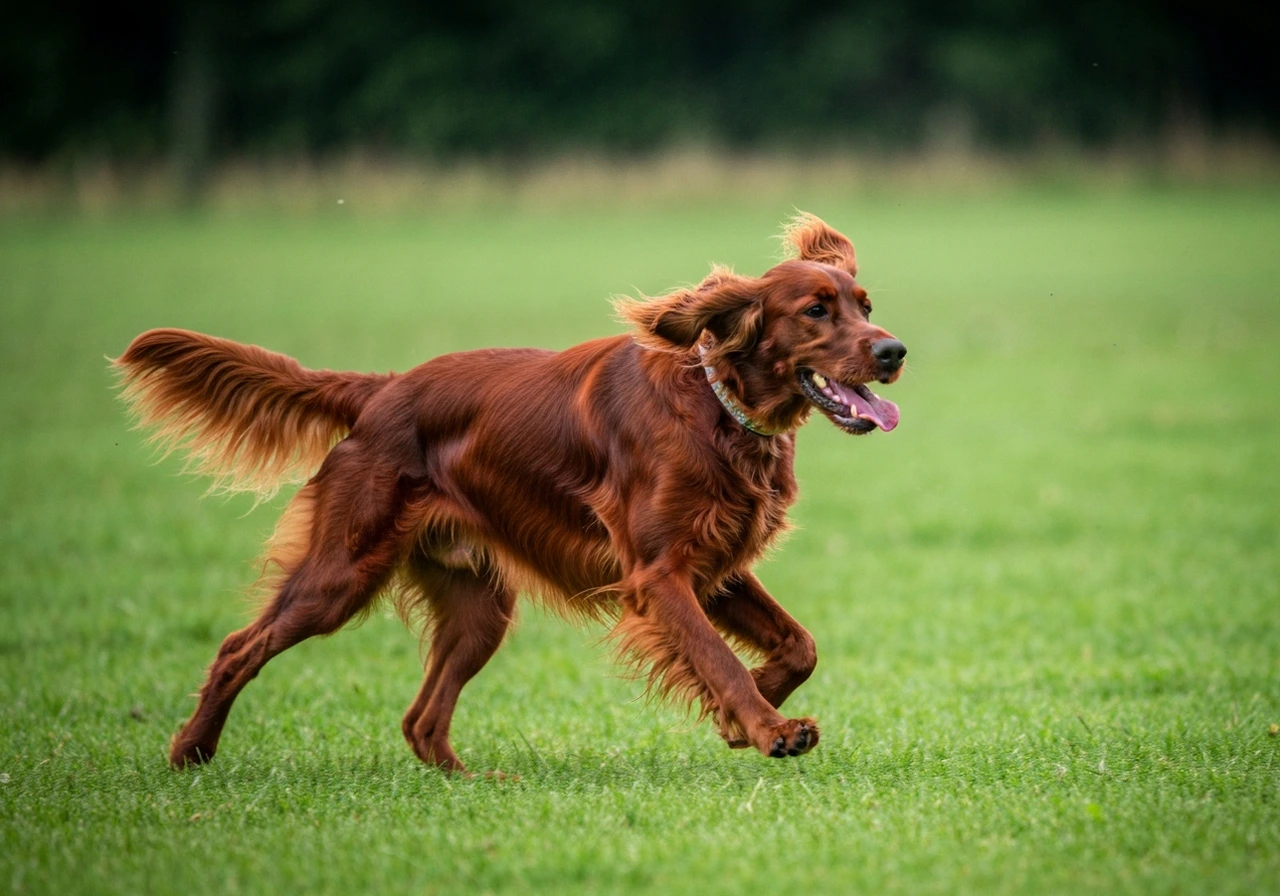
rcd1 holds historical significance as the first PRA-causing mutation identified at the molecular level. In 1993, researchers at Cornell University mapped this mutation in Irish Setters to the PDE6B gene, which encodes the beta subunit of phosphodiesterase 6. This discovery opened the entire field of molecular PRA genetics.
Clinical Characteristics
| Feature | rcd1 (Irish Setter) |
|---|---|
| Gene | PDE6B (beta subunit) |
| Mutation Type | Nonsense mutation creating premature stop codon |
| ERG Abnormality | Detectable at 3-4 weeks |
| Night Blindness Onset | 6-8 weeks |
| Complete Blindness | Typically by 1 year |
The Irish Setter community responded admirably to rcd1 identification. Systematic testing and strategic carrier management reduced mutation frequency from over 30% to near-negligible levels over approximately two decades. The breed demonstrates what becomes possible when research, testing, and breeding practice align effectively.
rcd2: The Collie Variant
rcd2 affects Rough and Smooth Collies through a different mutation in the same PDE6B gene. Despite affecting the same gene as rcd1, the mutations are distinct. Each arose independently in its respective breed population, and tests designed for one do not detect the other.
Clinical Characteristics
| Feature | rcd2 (Collie) |
|---|---|
| Gene | PDE6B (beta subunit) |
| Mutation Type | Different mutation than rcd1 |
| ERG Abnormality | Detectable at 4-6 weeks |
| Night Blindness Onset | 6-8 weeks |
| Complete Blindness | Typically by 1-2 years |
The Collie community faces additional inherited eye concerns beyond rcd2, including Collie Eye Anomaly (CEA). Comprehensive eye health management for Collies requires attention to multiple conditions simultaneously.
rcd3: The Cardigan Welsh Corgi Variant
rcd3 affects Cardigan Welsh Corgis through mutation in PDE6A, encoding the alpha subunit of phosphodiesterase 6. This variant causes particularly rapid progression, with some affected dogs showing clinical signs as early as six weeks of age.
Clinical Characteristics
| Feature | rcd3 (Cardigan Welsh Corgi) |
|---|---|
| Gene | PDE6A (alpha subunit) |
| Mutation Type | Deletion causing frameshift |
| ERG Abnormality | Detectable at 5-6 weeks |
| Night Blindness Onset | 6-16 weeks |
| Complete Blindness | Typically by 1 year |
The rapid progression of rcd3 means affected puppies often show obvious visual impairment before they would typically be placed in new homes. This has both advantages (affected dogs can be identified before placement) and challenges (the therapeutic window for potential intervention is extremely short).
rcd4: The Gordon Setter and Irish Setter Variant
rcd4 represents a more recently identified variant affecting Gordon Setters and, to a lesser extent, Irish Setters. Unlike rcd1-3, this variant affects the C2orf71 gene rather than phosphodiesterase subunits. The progression is somewhat slower than the other rcd variants.
Irish Setters can carry both rcd1 and rcd4. Testing for both variants is essential. A dog clear for rcd1 might still carry rcd4. Comprehensive testing protocols must address all known variants in the breed.
Why Severity Matters
The severe, early-onset nature of rcd variants has practical implications for breeders and researchers:
For Breeders
Affected puppies typically show obvious visual impairment before normal placement age. Careful observation can identify affected individuals, though DNA testing remains the definitive approach. The clear clinical phenotype historically allowed some breeding management even before DNA tests existed, through identifying and retiring parents who produced affected offspring.
For Research
The predictable, rapid progression of rcd variants makes them valuable research models. Researchers can efficiently study disease mechanisms and test interventions when the timeline from treatment to outcome is measured in weeks rather than years.
The rcd1 mutation specifically has informed gene therapy development. Understanding how PDE6B dysfunction leads to photoreceptor death has guided therapeutic strategies targeting this pathway.
Comparison Across RCD Variants
| Variant | Breed | Gene | Onset | Blindness |
|---|---|---|---|---|
rcd1 | Irish Setter | PDE6B | 6-8 weeks | ~1 year |
rcd2 | Collie | PDE6B | 6-8 weeks | 1-2 years |
rcd3 | Cardigan Welsh Corgi | PDE6A | 6-16 weeks | ~1 year |
rcd4 | Gordon Setter, Irish Setter | C2orf71 | Later onset | Variable |
Testing Recommendations
For breeds affected by rcd variants, breeding protocols should include mandatory DNA testing before any breeding. The tests are well-validated and widely available through certified laboratories.
- Irish Setters: Test for both
rcd1andrcd4 - Collies: Test for
rcd2 - Cardigan Welsh Corgis: Test for
rcd3 - Gordon Setters: Test for
rcd4
Given the early onset and rapid progression of these variants, affected dogs are typically identified before breeding age. However, carriers appear completely normal and can only be identified through DNA testing. Since carrier-to-carrier breedings produce 25% affected offspring, testing both parents before any mating is essential.
Living with RCD-Affected Dogs
While prevention is the goal, some dogs will be diagnosed with rcd variants despite testing programs. These dogs face early blindness but can still live fulfilling lives with appropriate support.
The early onset means affected dogs adapt to blindness as puppies, often before fully learning to rely on vision. Many owners report that their rcd-affected dogs navigate with surprising confidence, having never known full sight. Early environmental consistency and structured adaptations combined with verbal communication training help these dogs develop compensatory skills from the start.
The Research Legacy
The rcd variants, particularly rcd1, have contributed enormously to our understanding of inherited retinal disease. The first identification of a PRA gene in 1993 opened doors that remain wide open today. Continued research builds on this foundation, working toward treatments and better prevention strategies.
For the breeds affected by rcd variants, the path forward is clear. The tests exist. The inheritance is understood. The breeding mathematics allow complete elimination of affected offspring while retaining genetic diversity. What remains is consistent application of this knowledge throughout each breed community. The Herding Gene resource provides additional information on rcd variants in herding breeds and related genetic conditions.
Dr. Amanda Foster, Veterinary Ophthalmologist