PRA in Spaniel Breeds: Cocker Spaniels, Springer Spaniels, and More
Spaniel breeds carry some of the highest documented rates of PRA in the canine world. Understanding the specific mutations, breed-by-breed testing requirements, and how show lines have historically managed — or mismanaged — this inherited condition.
Among all the breed groups I work with, spaniels hold a particular place in the history of canine PRA research. The English Cocker Spaniel was among the first breeds in which progressive retinal degeneration was systematically studied, and the lineage connecting early pathological descriptions in the 1930s to today's molecular tests runs directly through decades of spaniel research.
That history brings both scientific depth and a sobering awareness of how long it takes for research advances to translate into breeding practice changes. PRA remains prevalent in certain spaniel lines decades after it could have been systematically eliminated.
The PRCD Mutation in Spaniels
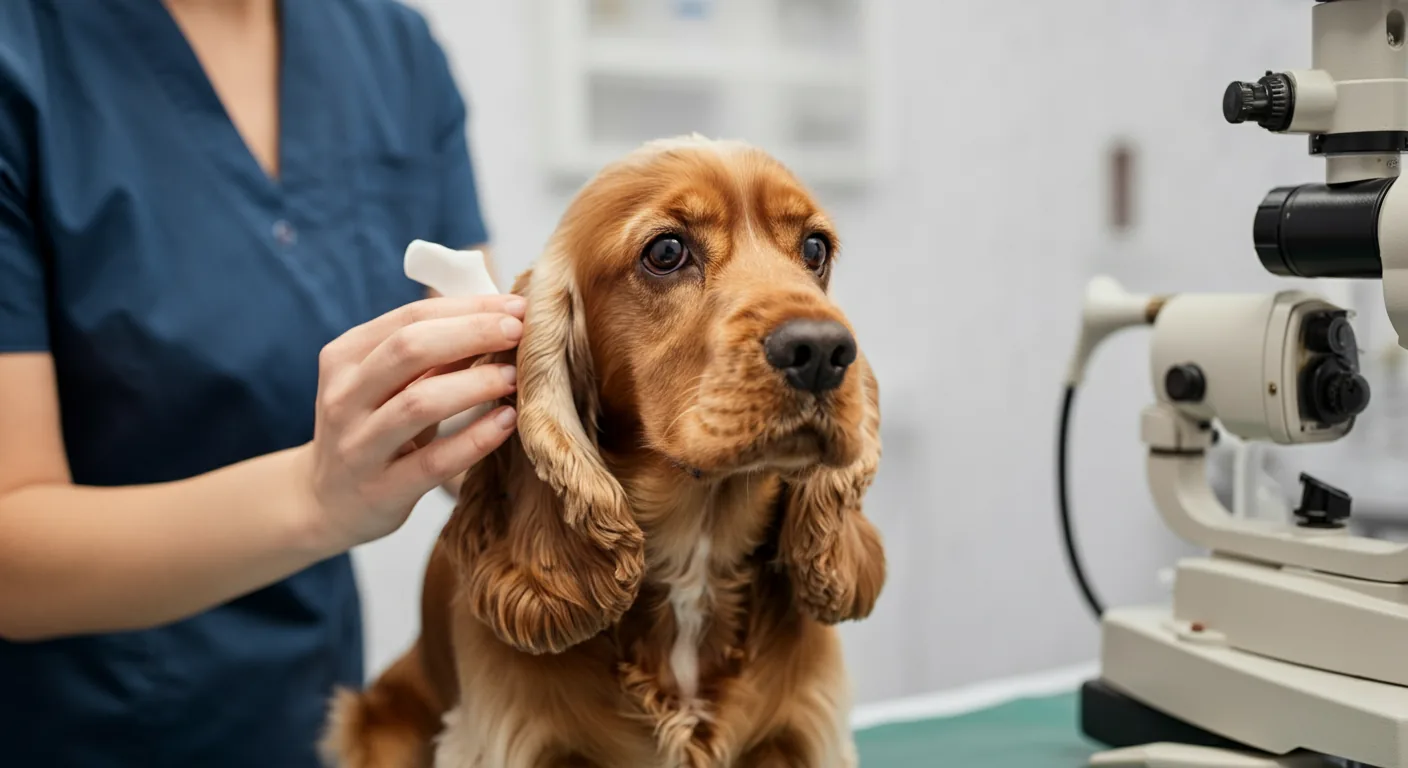
Most spaniel breeds affected by PRA carry the PRCD mutation — the same missense change in the progressive rod-cone degeneration gene that affects Labrador Retrievers, Portuguese Water Dogs, and over two dozen other breeds. This shared mutation is not coincidental. The PRCD variant is ancient, arising in a common ancestral population before many modern breed separations occurred.
For spaniel owners and breeders, this means the same DNA test covers multiple breeds. A Cocker Spaniel, an American Cocker Spaniel, and a Springer Spaniel all require the same PRCD assay. The prcd-PRA mutation causes late-onset progressive blindness in all these breeds, typically appearing clinically between three and eight years of age.
English Cocker Spaniel: PRCD
American Cocker Spaniel: PRCD
Springer Spaniel (English): PRCD
Welsh Springer Spaniel: PRCD (lower prevalence)
Miniature Long-haired Dachshund: cord1 (RPGRIP1) — distinct mutation
Field Spaniel: PRCD
Clumber Spaniel: ophthalmologic surveillance recommended
English Cocker Spaniels: A Historical Perspective
The English Cocker Spaniel's association with PRA extends so far back that early researchers described the condition simply as "hereditary blindness in Cocker Spaniels." The first systematic genetic studies in the 1960s established the autosomal recessive pattern that applies to all prcd-PRA forms today.
English Cockers bred in show lines have historically shown higher carrier frequencies than working lines, possibly reflecting founder effects in certain color varieties. Parti-color lines may carry different carrier rates than solid colors, though responsible testing programs across all varieties have reduced affected puppy production significantly in breeds with active health programs.
American Cocker Spaniels and the Show Ring Problem
American Cocker Spaniels present a particularly complex picture. The breed's enormous popularity in the United States through the mid-twentieth century, combined with intense selection pressure for show traits, created population dynamics where certain heavily-used stud dogs spread the PRCD mutation widely before testing was available.
The development of clinical ophthalmologic examination standards through the Canine Eye Registration Foundation (CERF) provided some protection, as eye exams could detect affected dogs before they progressed to obvious blindness. However, clinical examination cannot identify carriers. Only DNA testing distinguishes a true clear from a carrier — and this distinction matters enormously for breeding program management.
Since PRCD testing became available, responsible American Cocker breeders have incorporated it into standard health screening alongside hip evaluations and cardiac checks. The challenge lies in the large unscreened population supplying pet demand, where testing rates remain low.
Clinical Signs in Spaniel Breeds
Affected spaniels follow the typical prcd-PRA progression. Night blindness precedes day vision loss by months to years. Owners often notice their dog's hesitation in dim light, reluctance to enter dark rooms, or difficulty retrieving in low-light hunting conditions before any daytime deficit appears.
As the disease progresses, peripheral vision narrows, reaction to moving objects slows, and eventually central vision fails. The timeline varies between individuals but is generally slower in the English breeds than in some other affected breeds. Most affected spaniels maintain useful vision into middle age before progressing to complete blindness.
Cocker Spaniels with advanced PRA are particularly prone to developing secondary cataracts. The metabolic products released by degenerating photoreceptors accumulate in the vitreous and damage the posterior lens capsule. Unlike primary inherited cataracts, these secondary changes cannot restore vision through surgical intervention. Monitoring for secondary complications should be part of ongoing care for any diagnosed spaniel.
Breeding Decisions for Spaniel Fanciers
The mathematics of recessive inheritance apply equally to spaniels as to any other affected breed. Breeding two clear dogs produces zero affected or carrier offspring. Breeding a clear dog to a carrier produces 50% clear and 50% carrier offspring — all visually normal, none affected. This predictability means that carrier breeding strategies can retain valuable genetics while eliminating affected puppies from a program.
For breeds with high carrier frequencies, eliminating all carriers from breeding simultaneously would cause severe genetic bottlenecks and inbreeding. Population genetics strongly supports retaining carriers when they offer other valuable traits, paired only with tested clear partners. Over generations, selective pressure toward clear status reduces carrier frequency without sacrificing diversity.
Working Spaniels and Field Performance
Spaniels used for flushing, hunting, and field trials are doubly disadvantaged by PRA. The hunting role requires excellent vision in varying light conditions — exactly the capacity that prcd-PRA progressively destroys. Working spaniel lines that neglect PRA testing risk producing dogs whose field careers are curtailed years before their expected working prime.
Field spaniel breeders in the UK and continental Europe have generally maintained stronger testing cultures than some show lines, partly because the working role makes vision deficits immediately apparent. However, complacency in any subpopulation allows carrier frequency to rise silently through generations of untested matings.
Finding Tested Breeders
For prospective spaniel puppy buyers, verifiable DNA testing records are the minimum standard. Request to see actual laboratory certificates rather than breeder claims, and verify that both parents were tested — not just one. A comprehensive understanding of how genetic testing works and what results mean helps buyers evaluate the documentation they receive.
Breed club health committees typically maintain health databases where test results can be verified independently. Cross-referencing breeder claims against registry records provides additional assurance. Transparency about health testing is a hallmark of breeders committed to the long-term welfare of their breed. For broader context on breed health registries and their role in PRA management, see our overview of breed health registries and PRA programs.
The spaniel breeds have the scientific knowledge, the laboratory tools, and the population size to eliminate PRA-affected births. The remaining challenge is adoption of available tools across all breeding contexts — not just the conscientious minority already testing. That cultural shift, when it comes, will end a condition that has caused preventable blindness in these remarkable sporting breeds for too long.
Dr. Amanda Foster, Veterinary Ophthalmologist