X-Linked Progressive Retinal Atrophy: When Inheritance Breaks the Recessive Pattern
XLPRA follows sex-linked inheritance, making it one of the most genetically complex forms of PRA to manage in a breeding program. Understanding why male and female dogs are affected differently is essential for Siberian Husky and Samoyed breeders.
Most forms of Progressive Retinal Atrophy follow autosomal recessive inheritance — a predictable, manageable pattern where two copies of a mutated gene are required to develop disease. X-linked PRA operates by entirely different rules, and breeders who apply standard autosomal recessive thinking to XLPRA will make serious errors in breeding program management.
The X-linked forms of PRA were among the first to be characterized at the molecular level, partly because their distinctive inheritance pattern — affecting males far more severely than females — made them scientifically tractable. Understanding this inheritance is the first step toward managing it responsibly.
The Genetics of X-Linked Inheritance
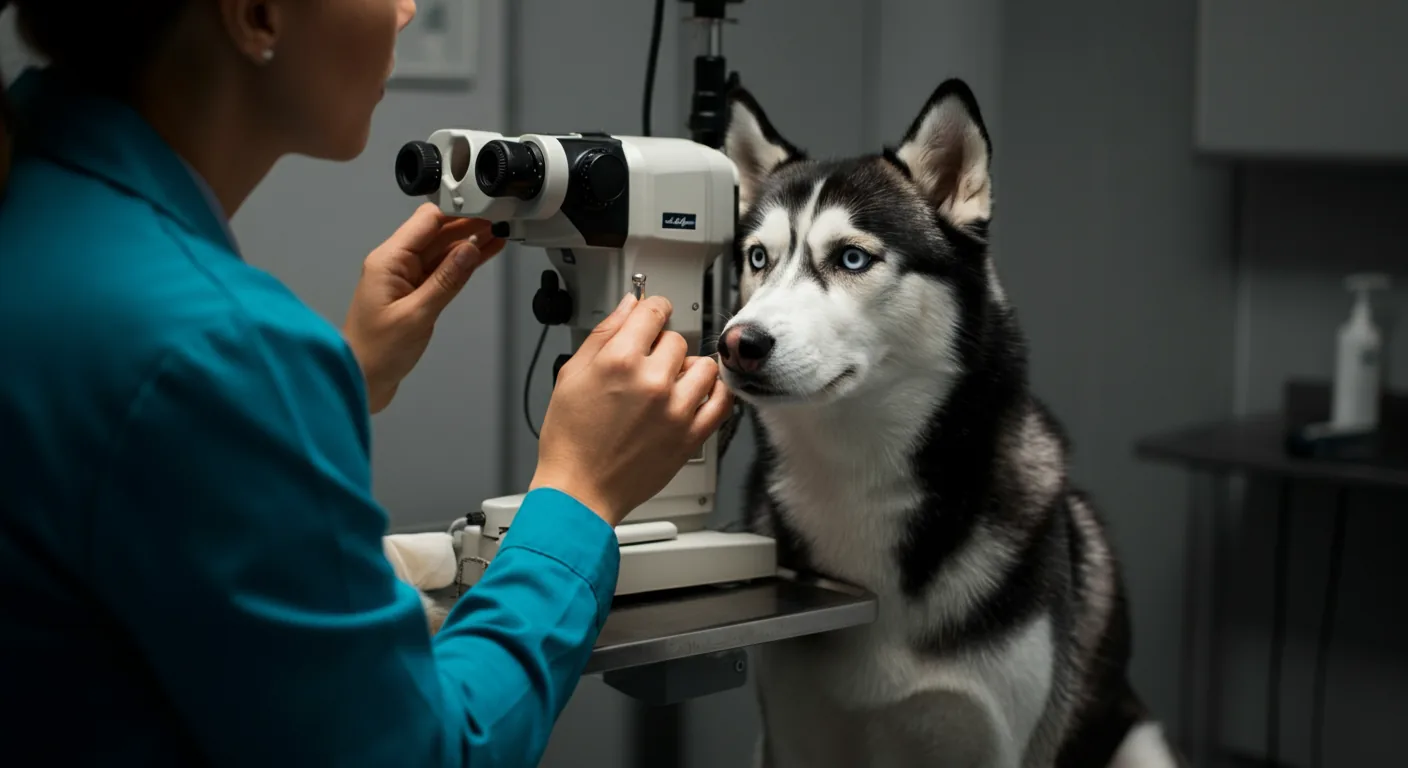
Females carry two X chromosomes (XX). Males carry one X and one Y chromosome (XY). In autosomal recessive conditions, both sexes are equally at risk and require two mutated copies. In X-linked conditions, males have only one copy of any X-linked gene. A single copy of a mutated X-linked gene causes full disease expression in males, because there is no normal second copy to compensate.
Females with one mutated and one normal X chromosome are carriers. They typically do not develop severe retinal degeneration because their normal X chromosome produces functional protein. However, some female XLPRA carriers do develop mild retinal changes — a phenomenon called lyonization, where random inactivation of one X chromosome in each cell can leave some retinal cells relying on the mutated copy.
Affected males: X(mut)Y — one mutated X chromosome, no normal copy
Carrier females: X(mut)X(norm) — one of each, usually visually normal
Clear females: X(norm)X(norm) — two normal copies
Affected females: X(mut)X(mut) — rare, requires affected sire + carrier dam
Key: No such thing as a male "carrier" — males either have or lack the mutation
XLPRA1 and XLPRA2 in Siberian Huskies and Samoyeds
Two distinct XLPRA mutations have been identified in dogs. XLPRA1, caused by a microdeletion in exon ORF15 of the RPGR gene, affects Siberian Huskies and some mixed-breed dogs. XLPRA2, caused by a different RPGR mutation, was first identified in Samoyeds. Both mutations affect the same gene but produce somewhat different disease timelines.
XLPRA1 in Siberian Huskies typically causes night vision failure between six months and three years of age, with complete blindness developing over subsequent years. This relatively early onset distinguishes it from most autosomal recessive forms. XLPRA2 in Samoyeds follows a similar but sometimes faster progression. Electroretinographic changes may be detectable even earlier than clinical signs suggest.
Clinical Presentation and Sex Differences
Male Siberian Huskies or Samoyeds with XLPRA present earlier and more severely than female carriers. Affected males typically show measurable ERG abnormalities in the first year of life, with night blindness becoming owner-apparent between one and three years. Progression to complete blindness follows within several additional years.
Female carriers may show subtle ERG changes on careful examination but usually maintain functional vision for life. Some studies have documented mild tapetal reflectivity changes in carrier females, but these rarely progress to functionally significant vision loss. This asymmetry between sexes is a defining characteristic of X-linked conditions and has important implications for clinical diagnosis and screening.
The gradual onset in affected males, moving through night blindness to more complete loss, follows the same photoreceptor degeneration pathway described for autosomal forms. Our detailed review of how PRA progresses clinically applies to XLPRA, though the accelerated timeline should be noted.
Breeding Decisions with XLPRA
Breeding decisions with XLPRA require thinking through X chromosome transmission carefully. Unlike autosomal recessive conditions where carrier-to-clear matings are entirely safe, XLPRA carrier females will produce affected sons.
| Dam (female) | Sire (male) | Daughters | Sons |
|---|---|---|---|
| Clear | Clear | 100% clear | 100% clear |
| Carrier | Clear | 50% clear, 50% carrier | 50% clear, 50% affected |
| Clear | Affected | 100% carrier | 100% clear |
| Carrier | Affected | 50% carrier, 50% affected | 50% clear, 50% affected |
The critical difference from autosomal recessive: a carrier female mated to a clear male will produce affected male offspring at 50% probability. This is fundamentally different from the autosomal recessive situation where carrier-to-clear produces zero affected offspring.
For XLPRA, the only way to eliminate affected offspring is to use only clear (non-carrier) females as breeding dams. Carrier females must not be bred, or must be bred with full understanding that 50% of sons will be affected. This makes the ethical calculus of breeding carriers more restrictive for XLPRA than for autosomal recessive forms.
DNA Testing for XLPRA
Molecular tests for both XLPRA1 and XLPRA2 are available through several accredited laboratories. Testing identifies:
- Females: Clear (normal/normal), Carrier (carrier/normal), or Affected (affected/affected — rare)
- Males: Clear (normal) or Affected (affected) — there is no male "carrier" status
Testing males is straightforward: they either have the mutation or they do not. Testing females requires distinguishing carriers from clears, which the molecular test accomplishes directly. Our guide to breed-specific genetic testing and our review of certified laboratories provide further guidance on accessing accurate testing for these specific variants.
XLPRA in Research and Gene Therapy
The RPGR gene mutated in XLPRA is also the most commonly mutated gene in human X-linked retinitis pigmentosa, making canine XLPRA models particularly valuable for translational research. Work in Siberian Huskies and Samoyeds has directly informed human clinical trial design.
Gene therapy for RPGR-linked retinal degeneration is currently in human clinical trials. The challenges are substantial — RPGR has complex alternative splicing, and the relevant isoform for photoreceptors is difficult to target precisely. Nevertheless, the canine work summarized in our overview of PRA gene therapy advances suggests that therapeutic options for XLPRA may become available within the coming decade.
For Siberian Husky and Samoyed breeders, the current best practice remains prevention through testing and careful breeding decisions. Understanding that X-linked conditions require different management strategies than autosomal conditions is the foundation of that prevention.
Dr. Amanda Foster, Veterinary Ophthalmologist